Top Machine Learning Techniques Every Professional Should Know


Understanding Machine Learning
Machine learning is revolutionizing various industries by providing systems the ability to automatically learn and improve from experience. Professionals across fields are increasingly integrating these techniques to enhance data-driven decision-making. Here, we explore some top machine learning techniques that every professional should be familiar with.
Supervised Learning
Supervised learning is one of the most commonly used techniques in machine learning. It involves training a model on a labeled dataset, which means that each training example is paired with an output label. This technique is used for tasks where the output is known, such as classification and regression.
Classification
In classification, the model is trained to predict discrete labels, such as identifying spam emails or recognizing handwritten digits. Techniques like support vector machines (SVM) and decision trees are popular in this domain.
Regression
Regression involves predicting continuous outcomes. For instance, predicting house prices based on various features like location and size. Linear regression and polynomial regression are frequently utilized methods in this area.

Unsupervised Learning
Unlike supervised learning, unsupervised learning deals with unlabeled data. The model tries to identify patterns and relationships within the data. This technique is essential for tasks like clustering and dimensionality reduction.
Clustering
Clustering is used to group similar data points together. It's widely used in customer segmentation and market research. K-means clustering and hierarchical clustering are some well-known clustering algorithms.
Dimensionality Reduction
Dimensionality reduction techniques like Principal Component Analysis (PCA) are used to reduce the number of input variables in a dataset. This helps in simplifying models and reducing computational cost while maintaining essential data features.

Reinforcement Learning
Reinforcement learning is a powerful technique where an agent learns to make decisions by taking actions in an environment to maximize cumulative reward. It’s commonly used in robotics, gaming, and autonomous vehicles.
In this approach, the agent learns through trial and error, receiving feedback from the outcomes of its actions and adapting its strategy accordingly. The Q-learning algorithm is a fundamental concept in reinforcement learning.
Deep Learning
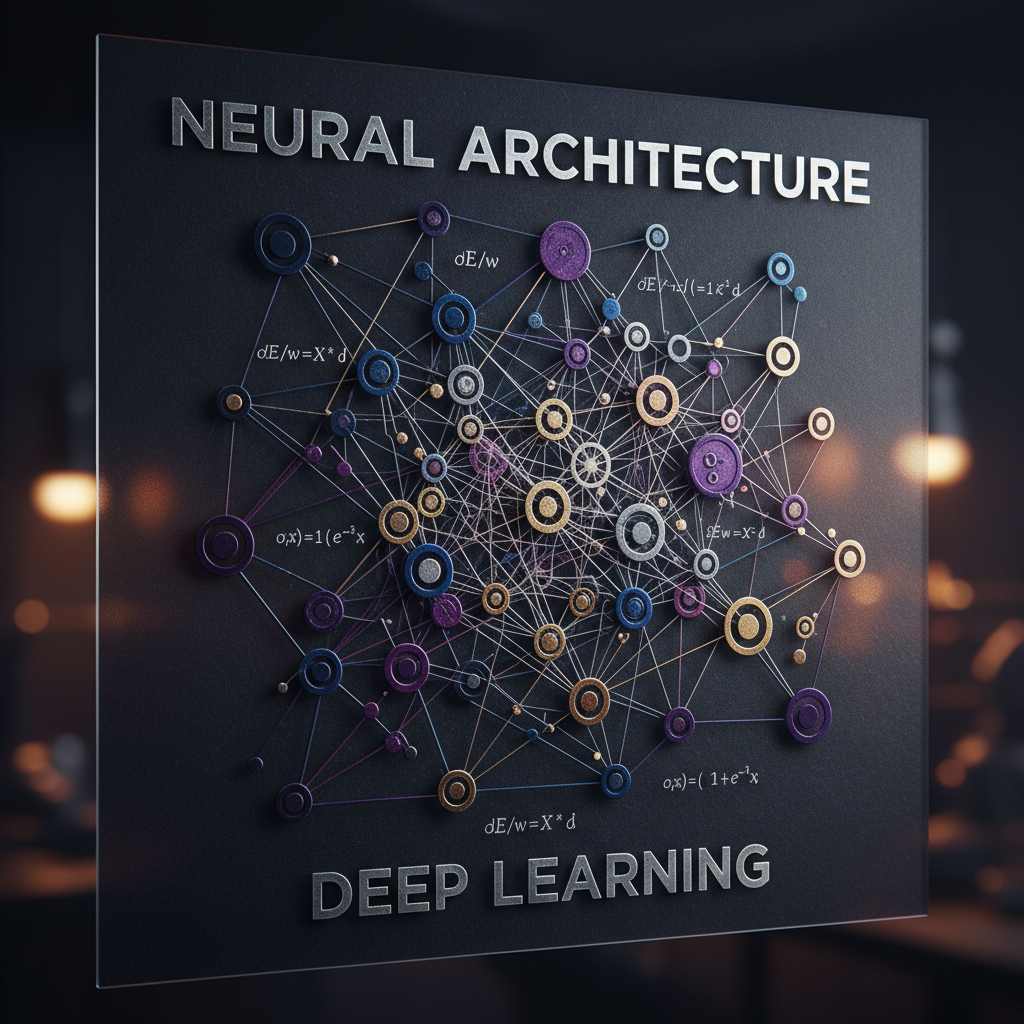
Deep learning, a subset of machine learning, uses neural networks with many layers (hence "deep") to model complex patterns in large amounts of data. It's instrumental in image and speech recognition, among other applications.
Convolutional Neural Networks (CNNs) are widely used for image processing, while Recurrent Neural Networks (RNNs) are effective for sequential data like time series or natural language processing.
Conclusion
By understanding and applying these machine learning techniques, professionals can significantly enhance their ability to analyze and interpret complex datasets. As the field of machine learning continues to evolve, staying informed about the latest advancements is crucial for leveraging its full potential.